Connecting PowerBI to Primavera, Implement Row Level security

Primavera has a very comprehensible security mechanism, based on OBS and EPS and user access, it is very mature and rigorous, but once you have a direct connection to the database’s backend all this security disappear, the connection will give you access to everything in the database.

This blog post is not a comprehensible security introduction to Primavera reporting, but rather a gentle introduction to RLS in PowerBI and how you can leverage it in the simplest form possible, and a reminder why security is a very important consideration, specially when you deal with a portfolio and multiple division in the same company.

if you don’t want to read the whole blog, I think all I want to say is

  • Connecting to Primavera database is not hard
  • Only Primavera Admin or IT should have access to Primavera Database connection.
  • There are multiple solution to implement Projects level access, particularly if you are dealing with multi divisions portfolio

What is row level security?

Is the ability to access a table but read only some rows, for example you want to read the table TASK, which show all the activities for all the projects, obviously you need your user to view only the activities that belong to the projects assign to them.

The Problem

Primavera administrator want to create a companywide reporting system based only on Primavera Database, RLS is implemented in PowerBI everyone see only the data that belongs to him, happy days, planning manager from division X like the reports but wants to use other data sources too, not only Primavera but Ecosys, cobra , progress measurement system etc, still he needs to see only his projects, Planner Y don’t care about PowerBI and wants the raw data to do his own stuff using some obscure VBA Excel, PowerBI as of this writing can not connects to multiple datasets from other reports, and you can’t mix live connection with import from other source.

Solutions

Whatever you do , you need to have only one connection to Primavera Database, don’t give multiple users access to the production database, that’s bad ( probably your DBA, will not do it anyway), I know it is still read only, but it is bad practise, if your write an expensive query against a reporting server, it is annoying,  but slowing Primavera server will get you angry planners from everywhere ( we are very famous for being grumpy)  

  1. Reporting Database

Ideal solution, just spin a cheap SQL instance on azure and make sure it is on the same region as your PowerBI ( no egress fees), implements RLS there for the people who want to author reports ( the viewer access will be done in PowerBI),any IT can easily create a small pipeline to copy data from Primavera Database ( doesn’t matter, Oracle or SQL server) and you get your  data fresh every morning or whatever schedule you want. ( bonus point, no PowerBI gateway between PowerBI and SQLServer as both are in azure)

  • PowerBI Dataflows

If  SqlServer is not an option , PowerBI dataflows seems like a perfect solution here, you connect once to the Primavera databased and you can share the results with other user,  PowerBI will be hitting the Dataflows instead of the production server, perfect, yes, unfortunately, Dataflows results are just CSV, no RLS, either you read the whole TASK table or not.

  • Analyse in Excel

Personally, I think it is the most Powerful feature of PowerBI, when you have access to a report in PowerBI, when you click analyse in Excel you get access to all the data behind the model, not only that you can create a table that fetch the data and bingo, it does honnor RLS, you see only your stuff, so the workflow will be something like this, for how to use analyse in Excel, Please read this excellent blog by Chris Webb
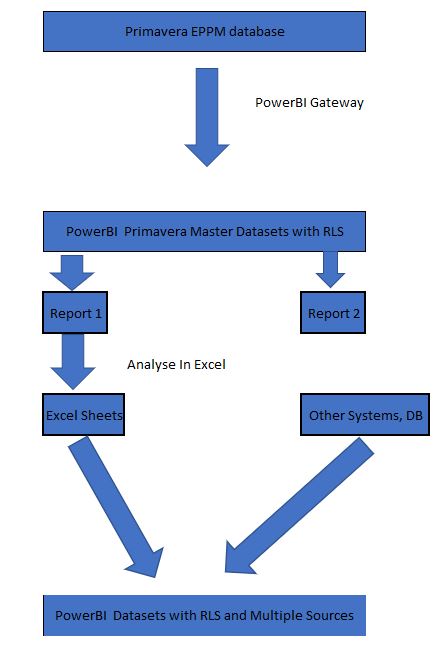
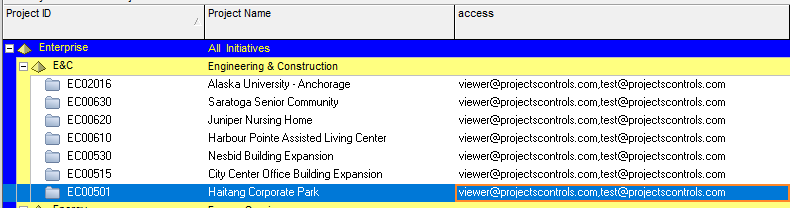
   Let’s see how to use RLS in PowerBIRLS is very vast subjects, and has many different implementations and nuance, in real life you need to have something like a hierarchy security like Primavera OBS, and you need to read this excellent series of blogs from Reza,  let’s say I want to grant view access to a couple of Projects to two users (Viewer @ projectscontrols and test@ projectscontrols ), those users are not necessary planners they don’t have access to Primavera
I just used Project user defined field and typed the full address, you need the email address as it is the format that PowerBI understand, the good thing about UDF, you can put multiple values separated by a comma, I pulled the following tables from P6 Database (UDFTYPE , UDFVALUE) and just using PowerQuery to split and unpivot, and I go this little tables.
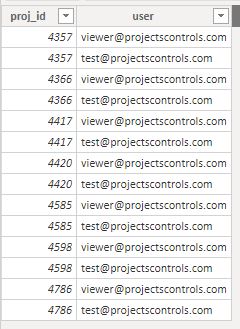
Now I have the Project ID and the username of the users who can access the projects.
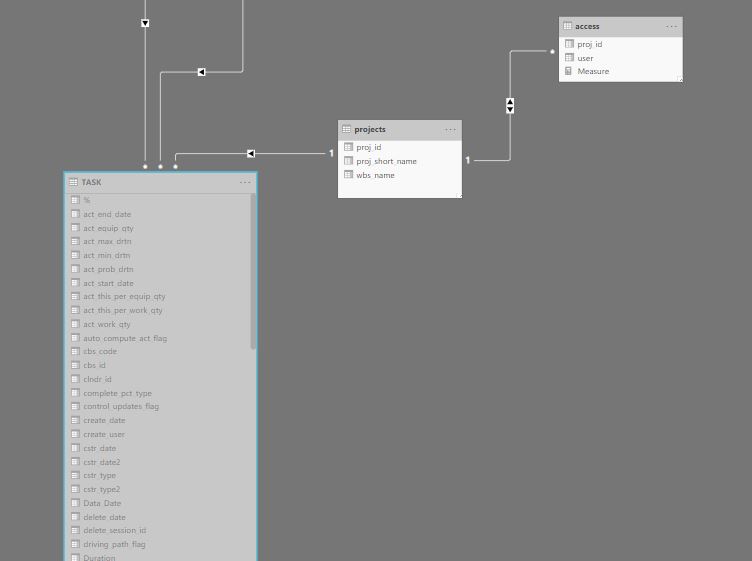
Edit the relationship between access table and Project tables
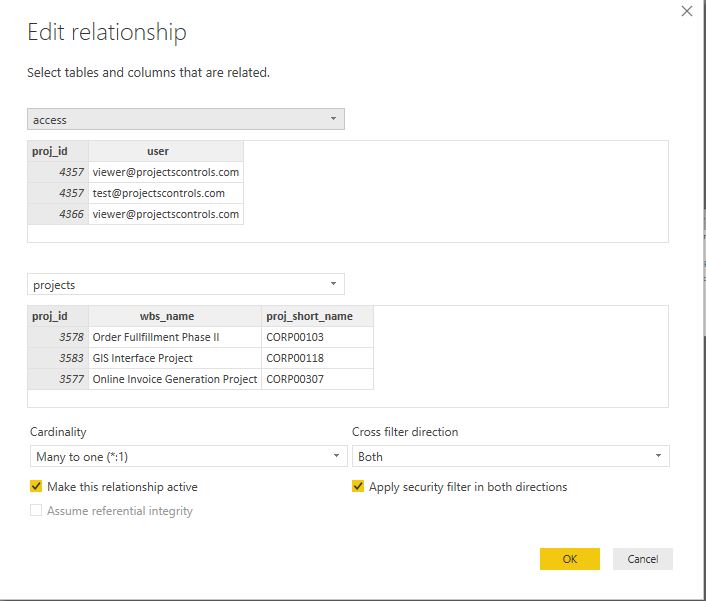
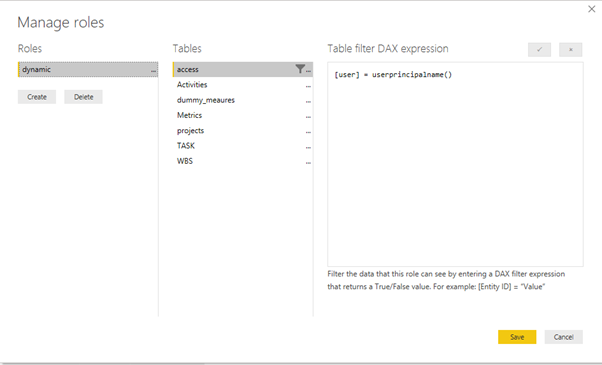
Manage role

Basically, table access get filtered by PowerBI, then it will filter table PROJECT, that will filter table TASK

Publish to PowerBI service to the owner account but not to  user Viewer as he  should only have access to view and build ( you need build to use the dataset in other reports), RLS works only with viewer role,
Now let’s see what the user viewer will see
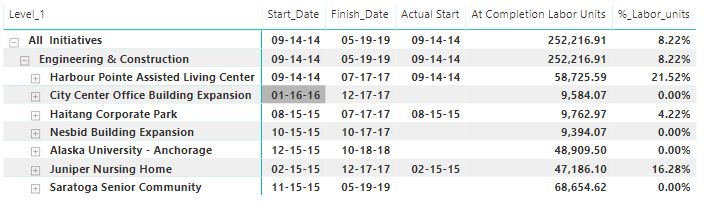
Yes, only 7 projects are visible to that user, let’s try analysing in Excel,

Once I select table access, only the viewer gets selected
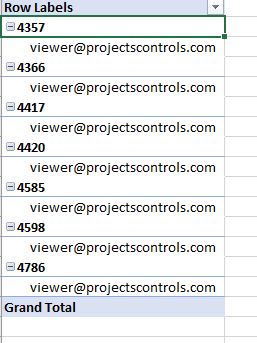
Now let’s query only the table TASK ( yes DAX is a query language too)
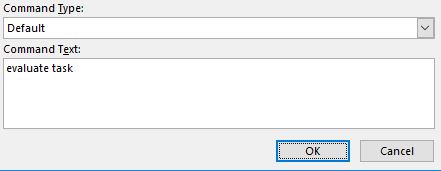
Voila we have the TABLE Task filtered, with only 7 Projects
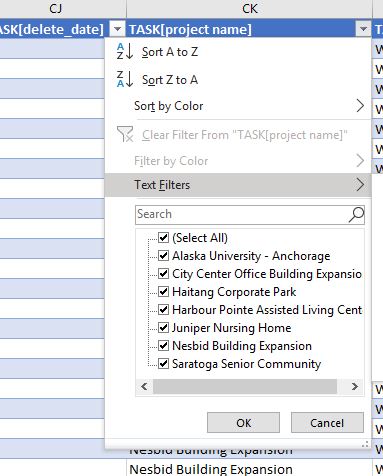
Now you can add more tables and load those tables into another PowerBI datasets and do your own enhanced reports.


Reproducing Primavera Select Columns in PowerBI; aka Dynamically adding measures to a Matrix

Edit: 16 may 2022, the hack is no more required, PowerBI released fields parameter that support this functionality out of the box.

TLDR, The online report is here

Primavera P6 calculated a lot of rich metrics for a schedule, we all know the basics, Start Date and Finish date, but there are all kinds of other values ( Cost, Labor hours, not Labor , Float Duration etc)

The challenge is, different people want to see different measures,  and once you publish your reports, the viewer can not change the visual, Microsoft is working on this feature, but it will take another couple of months to be released.

The trick was suggested by Kasper de Jonge and in a random chat with @DingbatData @_Ivan_Bond , they use it already to solve similar issues, actually it is very easy

Anyway the purpose to reproduce something like this from Primavera

  1. Create a new table that contains all the measures

Instead of copy and past all the measures, I just used DAX studio connected to my PowerBI desktop to generate a list of all the measures, read this link

The Category is to just to make it easy to select which measure to select, the index is to keep the same sort in the slicer, I don’t want to show actual Finish before Actual Start.

2- Create a Master Measure that check if the value is selected.

Using Switch and SelectedValue give the result, I had only to add some condition to format the results of Date to be show as date not Number, you can vote on this idea

Here is a snapshot for the first 4 measures ( currently I have 29 in the models)

Selected_Measure =
SWITCH (
    SELECTEDVALUE ( dummy_meaures[MEASURE_Values], BLANK () ),
    “Task_Count”, [Task_Count],
    “Budget Labor Units”, [Budget Labor Units],
    “Actual Finish”, SWITCH (
        [Actual Finish],
        BLANK (), BLANK (),
        FORMAT ( [Actual Finish], “mm-yy-yy” ),

    “%_Labor_units”, SWITCH (
        [%_Labor_units],
        BLANK (), BLANK (),
        FORMAT ( [%_Labor_units], “0.00%” )
    ))

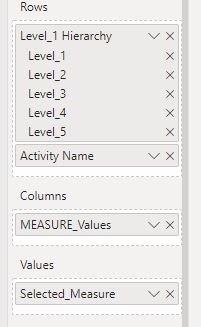
3- Add the column Masure_Value to the column in the Matrix and Seletced_value in the values Area.

4-Voila

5-Bonus

I am using bookmarks to toggle the select Columns Button, I think it is freaking cool,  hopefully in the short term PowerBI add more features so we can build not only dashboard but real application interface.

Connecting PowerBI to Primavera Database – Part 2 (WBS report)

in the first blog post of this series, we showed how to connect to Primavera SQL server, in this blog we build our first report, we use only the three tables TASK, PROJECT, and PROJWBS

the online report is published here

I will not show the details of every steps, you need to have a basic understanding of PowerQuery and DAX, but i will highlights some aspects of Primavera Database schema that you should be aware of.

Reproduce Project View

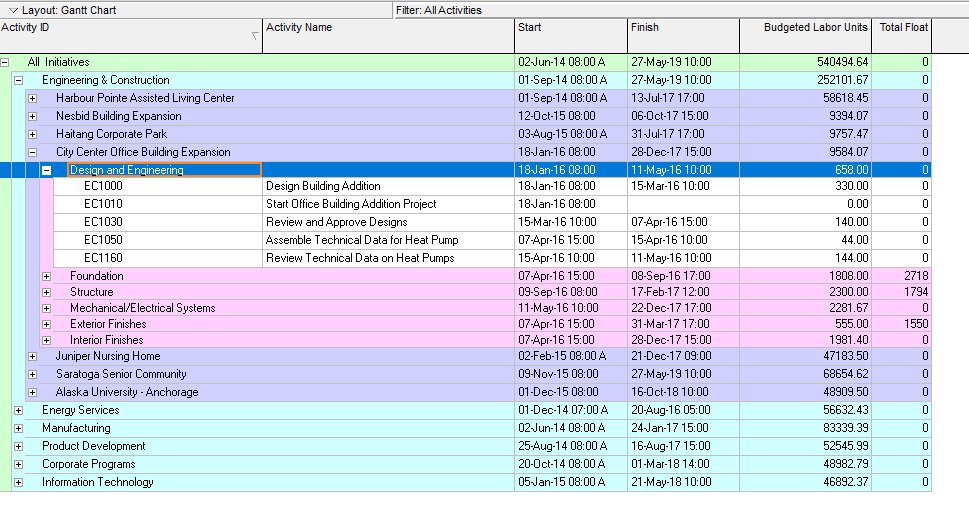
this view show all the projects grouped by WBS and show measures, start date, finish date and budget labor units

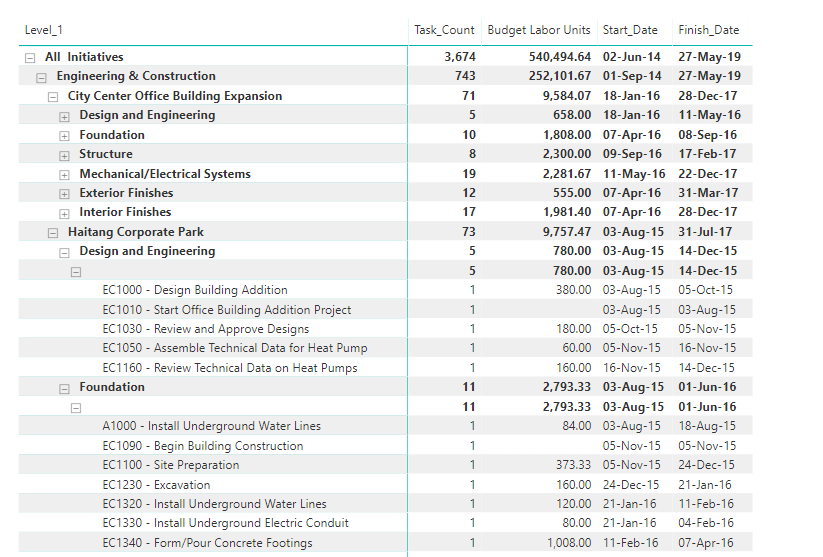
and here is the equivalent report in PowerBI

PROJWBS

the table PROJWBS store the EPS/WBS data for all projects, it is represented the database as a parent, child ID, which can’t be used directly by PowerBI, first we need to flatten the data to multiple levels so we can show it in a matrix visual, so basically moved from this format

to this format

you have multiple options either using SQL , DAX or PowerQuery, for Powerquery here is an excellent resource by the Imke Feldmann , for our example I am using DAX , the canonical reference is by Marco Russo

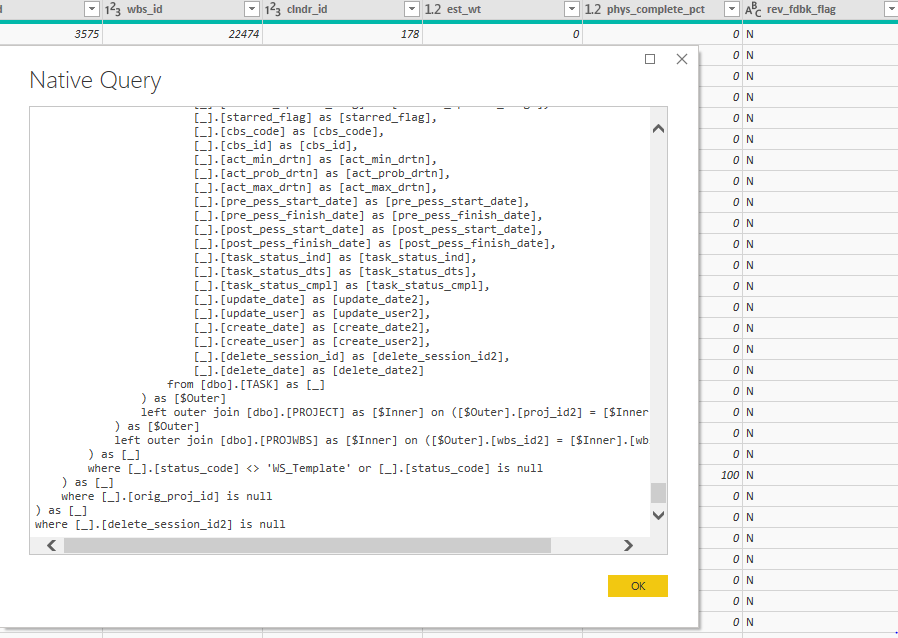
just make sure when you import a table from SQL server to have this filter [delete_session_id] = null , because Primavera don’t directly delete data, but instead have something called soft delete, ie; the items is not shown in the client but it is still in the database and will be deleted later, anyway for PROJWBS remove all the template WBS, (I think they are used by the EPPM web client)

TASK

task is straightforward it save all the tasks of the project, same filter [delete_session_id] = null

PROJECT

we use project table only to filter the baseline out, in Primavera current project and baseline are saved in the database exactly the same way ( that very powerful paradigm ), but for our report we want to show the activities only for the current project, too easy [orig_proj_id] = null and the best part, we don’t have to write any queries, Powerquery simply generate the SQL for the database ( that’s awesome)

Simple Data Model

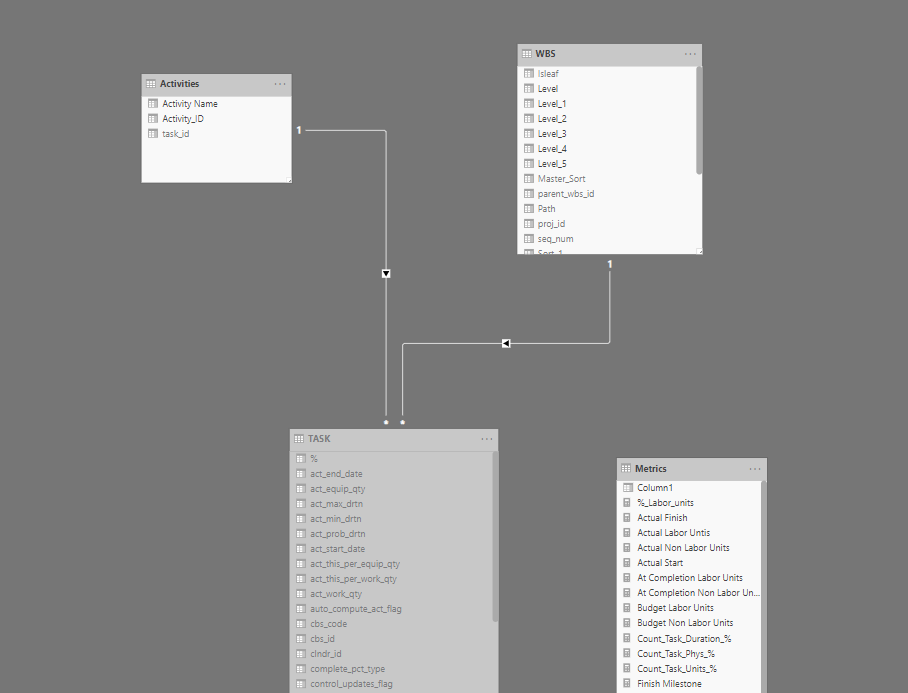
the two tables are connected by the field wbs_id, we added another copy of the table TASK as a dimension table for reporting ( just activity id, and activity name), and we have this simple data model, I like to save measures in a separate dummy tables

as you can see, building a data model is relatively easy, the complexity start when you want to add more measures, for example, total float, you need to connect to the table CALENDAR, if you want cost, you need to connect to other tables, and if you want spread it will become a little trickier ( hint it is not saved in the database)

hopefully by now, instead of asking how to connect to Primavera Database, the interesting question become, in which table the data is saved and how to join two separate tables to get the report you want

if you are still reading, I will appreciate if you can vote on this idea, unfortunately you can’t dis-activate table sorting in PowerBI, in this particular report, the sorting is already defined by the WBS, if the user click on the header, the order will change, they can still reset the order using the measure sort, still very annoying

Connecting PowerBI to Primavera Database, Part 1

I think one of the most asked question when some talk about Primavera and PowerBI, is how to connect to the database, ok, the good news is, the connection itself is easy, the bad news, extracting useful information is a bit of work.

Just to show how it work, I am using a temporary installation in my personal laptop, as obviously I don’t have access to my production database.

I am using a developer edition of SQL Server 2006, and an evaluation copy of EPPM, oracle allow the use the evaluation of most of its software for the first 45 days, you can download a copy from here, you need SSMS too

For the purpose of this blog, we will query the “normal” Primvera tables, for the extended schema, which is a groups of tables and  views design specifically for reporting, but those extra tables are empty per default and you need to configure publishing service ( will discuss it in a future blog), please note I already blogged about how to connect when using Sqlite in the case of standalone P6 professional

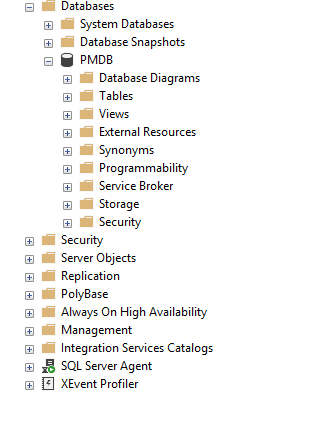
Connect to SQL server using SSMS

When you install Primavera, you get to define 4 user account

  • sa : the database admin account (not the admin for primavera application).
  • Privuser, pubuser : used to connect Primavera app to the database
  • Pxrptuser : user account for reporting

              We will use sa to connect to the database            

When you click on connect you get this

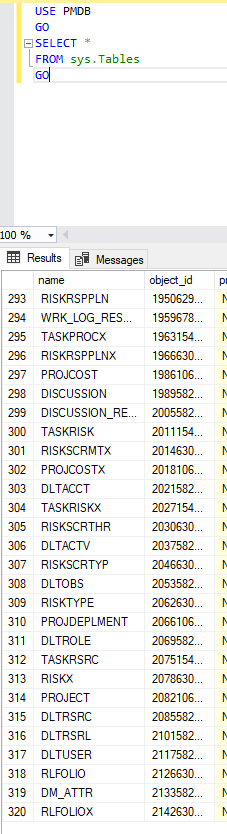
The database itself has 320 tables; you can check that by running this SQL script

USE PMDB

GO

SELECT *

FROM sys.Tables

GO

Create a read only user

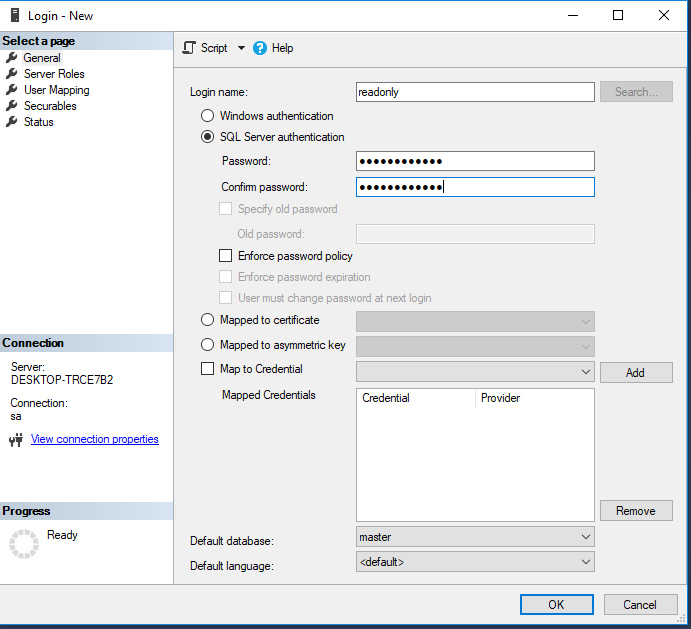
Connecting using the admin account is just very bad practise, and I don’t want to mess with the existing account, so instead we will create a read only user account

  1. Create a New Login
  • Create password
  • Map the user the PMDB
  • Assign a new role

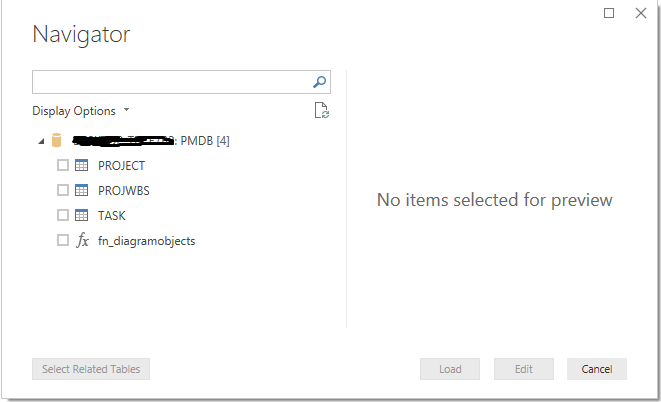
Instead of having access to the 320 tables, we create a new role (read_only) and we just assign the 3 most important table in the database, you can add later more tables, we granted select only, so no read access

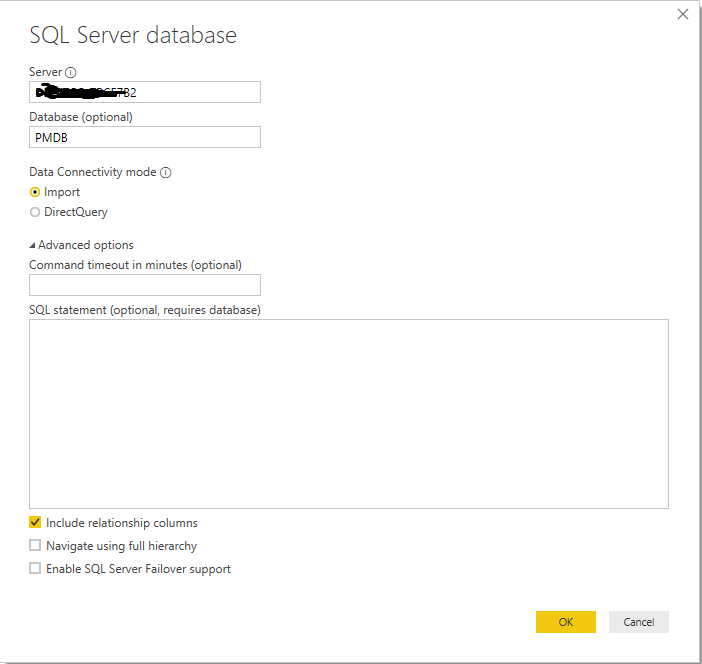
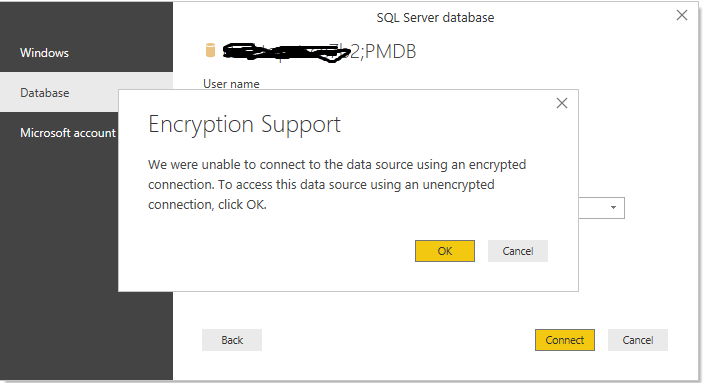
Connect PowerBI to SQL using read only user

and Voila our Tables are now visible in PowerBI

so the answer to how to connect to Primavera Database from PowerBI is you need a user name, password and the server name, the challenge is how to extract meaningful reports from those tables ?

what’s next

at this stage, you need to get yourself familiar with Primavera Schema, yes it is 320 tables, but the basic one are three, and usually for my reporting I use around 10, I wrote an introduction to Primavera schema 6 years ago, I hope it is still relevant

Part 2 is published here

For security implication please read this